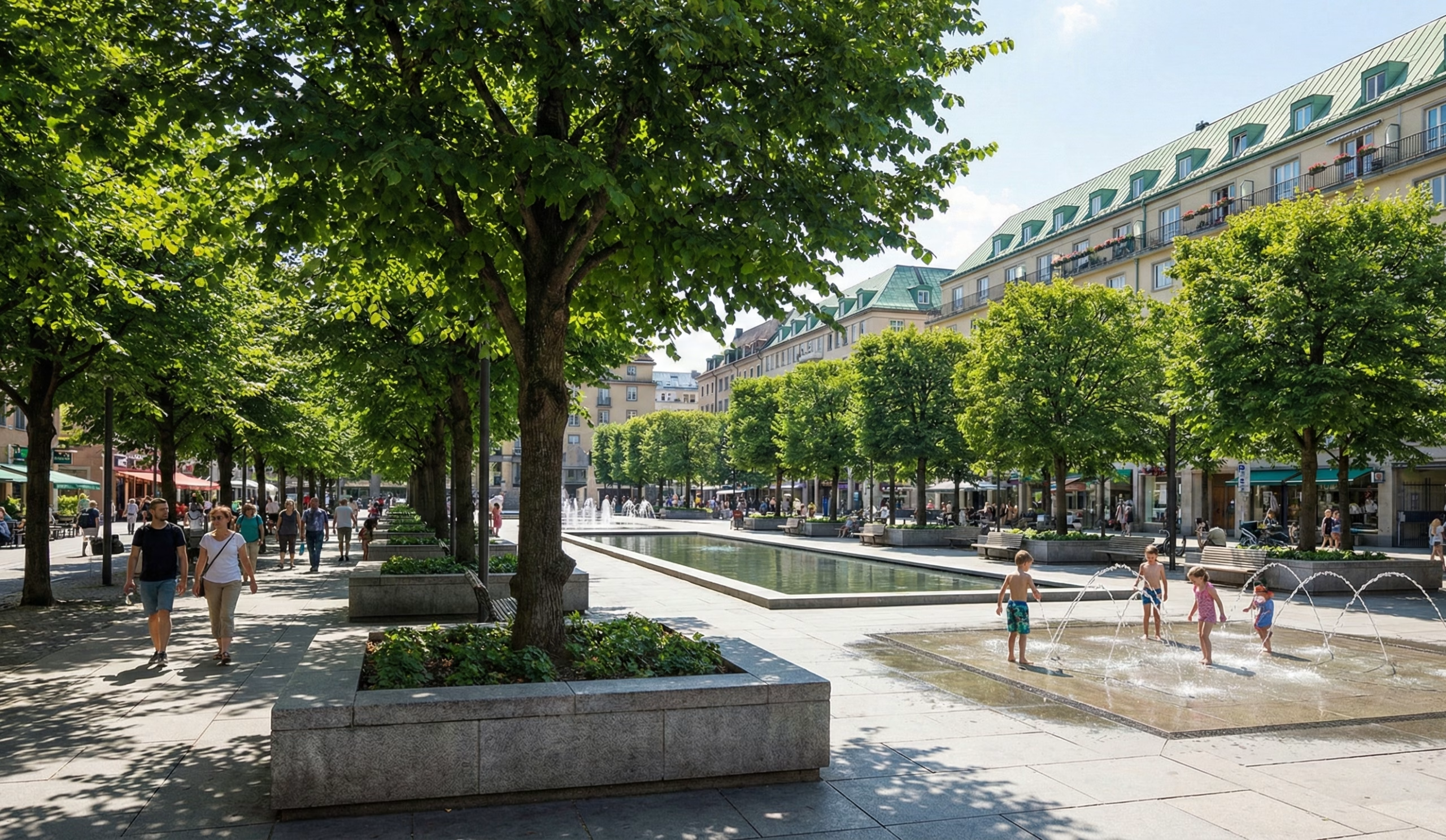
The urban heat island phenomenon is now one of the most pressing challenges facing those involved in architecture and sustainable design. Understanding how to mitigate the urban heat island effect is no longer merely an aesthetic choice, but a technical necessity to ensure environmental comfort and public health in our modern cities.
In this article, we will explore the most effective ways of transforming public spaces from heat traps into liveable oases, analysing the role of materials, vegetation and water.
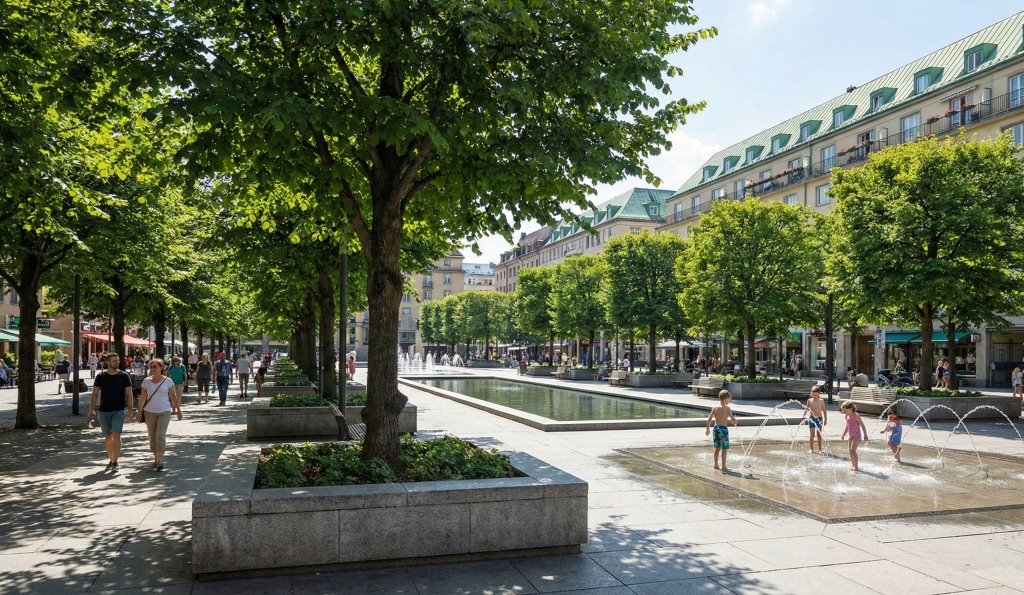
1. What is an urban heat island and how does it affect the city?
The urban heat island effect is the phenomenon whereby urban areas experience significantly higher temperatures than the surrounding rural areas, particularly at night.
Contrary to what one might think, the UHI is not a random phenomenon, but is strongly influenced by:
- Urban morphology: The density and height of buildings create so-called ‘urban canyons’ that trap radiation.
- Building materials: The widespread use of dark, impervious surfaces (asphalt, concrete) that accumulate heat.
2. The power of Albedo: reflecting to cool
Albedo is one of the most important technical parameters for combating the urban heat island effect. Albedo is a coefficient that measures a material’s ability to reflect solar radiation.
From a physical point of view, it can be expressed using the following formula:
Using high-albedo materials (light-coloured surfaces or ‘cool materials’) makes it possible to drastically reduce the thermal absorption of pavements and roofs, immediately improving the urban environment at pedestrian level.
Technical note: For a comprehensive assessment, albedo must be considered in conjunction with thermal emissivity, i.e. the material’s ability to release accumulated heat in the form of infrared radiation.
3. Trees in the city: much more than just decoration
Planting trees is one of the most effective nature-based solutions (NBS). The environmental benefits of vegetation are twofold:
- Shading: Reduces the radiant temperature of surfaces, protecting people from direct radiation.
- Evapotranspiration: Plants release water vapour into the air, removing heat from the environment and lowering the temperature of the surrounding air.
Designing green spaces therefore means having a direct impact on the perception of heat and on air quality.
4. Water-based cooling: variables and potential
Here is the updated paragraph, incorporating the historical and technical details you requested. This addition not only enriches the content but also enhances the article’s authority by citing classic examples of bioclimatic architecture.
4. Water-based cooling: variables and potential
Water is an extremely powerful cooling system, but its effectiveness is not universal. When we incorporate fountains, water features or misting systems into a design, we must bear in mind that the effectiveness of water depends on solar radiation and relative humidity. In very dry climates, evaporative cooling can lower temperatures by several degrees, whilst in climates where the air is already saturated with moisture, its effect on indoor comfort is much more limited.
History provides us with a masterful example of this technique, through the Arabs’ skilful use of water, even in Sicily. By incorporating fountains, canals (the so-called qanats) and lush gardens — such as those at the Zisa and Cuba palaces in Palermo — the Arabs were able to cool both indoor and outdoor spaces by harnessing the very principle of evaporation and the constant movement of water flows. This ancient wisdom reminds us that water is not merely a decorative element, but a cornerstone of bioclimatic design, capable of mitigating the urban heat island effect and transforming scorching heat into a revitalising microclimate.
The Dimora Prainito building, as featured in the publication, was designed to arrange the rooms in such a way as to make the most of the building’s orientation and views over the valley; a skylight in the centre of the spacious living room improves indoor air circulation, whilst also utilising the nearby swimming pool to cool the incoming air.
5. Towards a new quality of urban life
Urban liveability is not measured solely in square metres of green space, but encompasses the full range of factors contributing to the comfort of public spaces. Effective building and urban regeneration today must incorporate:
- Materials with low thermal inertia.
- Smart shading systems.
- Permeable surfaces for the water cycle.
Only by taking a holistic view of the microclimate will we be able to design truly resilient cities.
Conclusion: the role of the architect
Mitigating the urban heat island effect is a planning imperative. Whether it is a small street furniture project or a large-scale implementation plan, every choice of colour and material affects the well-being of citizens.
Are you planning a refurbishment project and want to optimise the comfort of your space? Contact me for technical advice or to find out more about using reflective materials in your projects.